COAT (in Polish SUKMANA /suk-ma-na/) |
||
|---|---|---|
Visual or audio material of objects, buildings and constructions, processes |
||
 |
 |
|
Description accompanying the visual/audio material
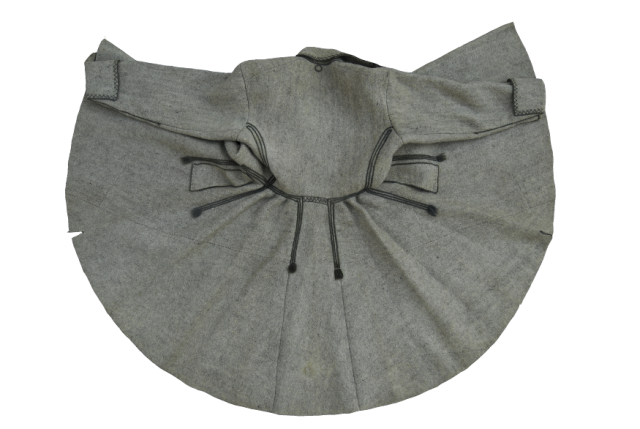
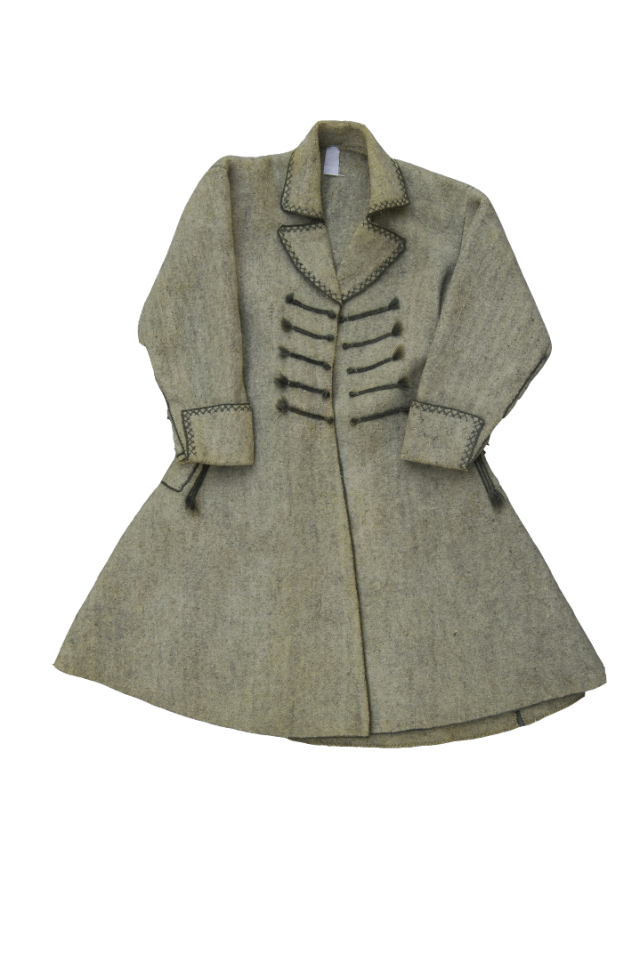
2nd half of 20th century POLAND Pastoral life Poland, Podkarpackie Province, Nadsanie region (surroundings of towns Jarosław nad Lubaczów). “Sukmana” is a typical product of the local community. It was made and used nearby Jarosław and Lubaczów. The object comes from the ethnographic collection of Artur Dobrucki from Jarosław that was passed to the collection of Museum Kresów in Lubaczów in 2006. “Sukmana” underwent a thorough restoration in a workshop of M. Ratajczyk in 2007 (catalogue no. ML/E/2338). |
||
“Sukmana” is a kind of long coat that was used by men in rural communities (farming, or farming-breeding communities). It is made out of a homespun cloth – a felt woolen piece of cloth produced in home weaving workshop or in places in a village where the process of fulling took place. From a type of a material comes also the name for this clothing (“sukno” – cloth , “sukmana”. “Sukmana” was a feast clothing and symbolized the social status – it was worn by married men. Less decorative sukmana were also worn daily. This type of clothing appeared in Poland in the 18th century under the influence of the clothes worn by the nobility ( “żupan” /ˈʐupan/). “Sukmana” was very popular in villages and small town between 19th and 20th century. Later on it disappeared went out of use. It was popularized in art and literature and became a symbol of peasants. In this terms it is still used nowadays in some parts of Poland during national or religious feasts. |
||
W. Gaj-Piotrowski, Kultura materialna ludu okolic Rozwadowa, Rzeszów 1975; |
||
Sheep products (wool, cloth), folk costume |
||